Hermes vs OpenClaw: which should you use?
Hermes Agent vs OpenClaw: a practical comparison of two open-source AI agents, a straight answer about which suits which kind of person, and where Claude Code fits.

By Nick
On this page
Before you start
Learn
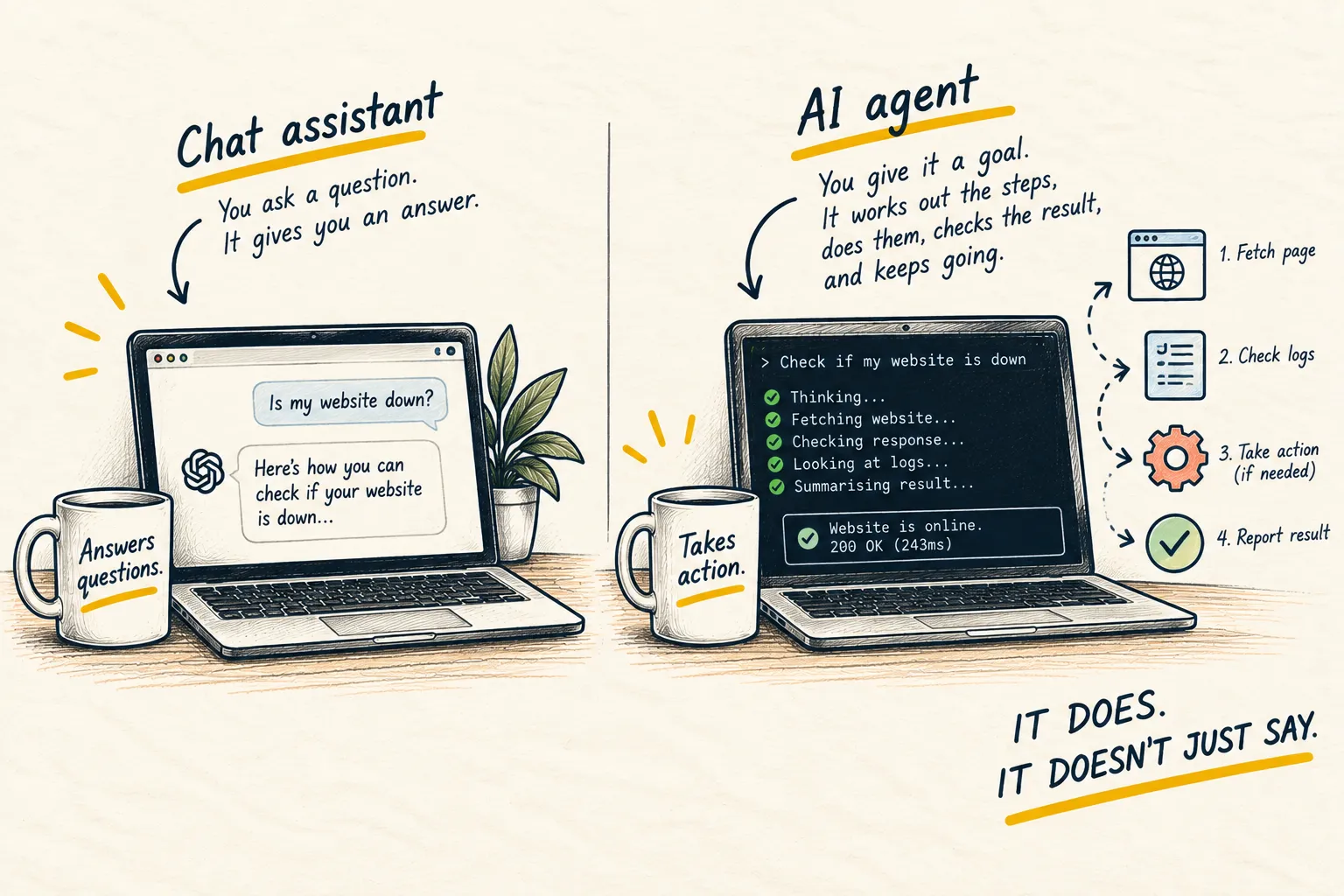
What is an AI agent?
Hermes
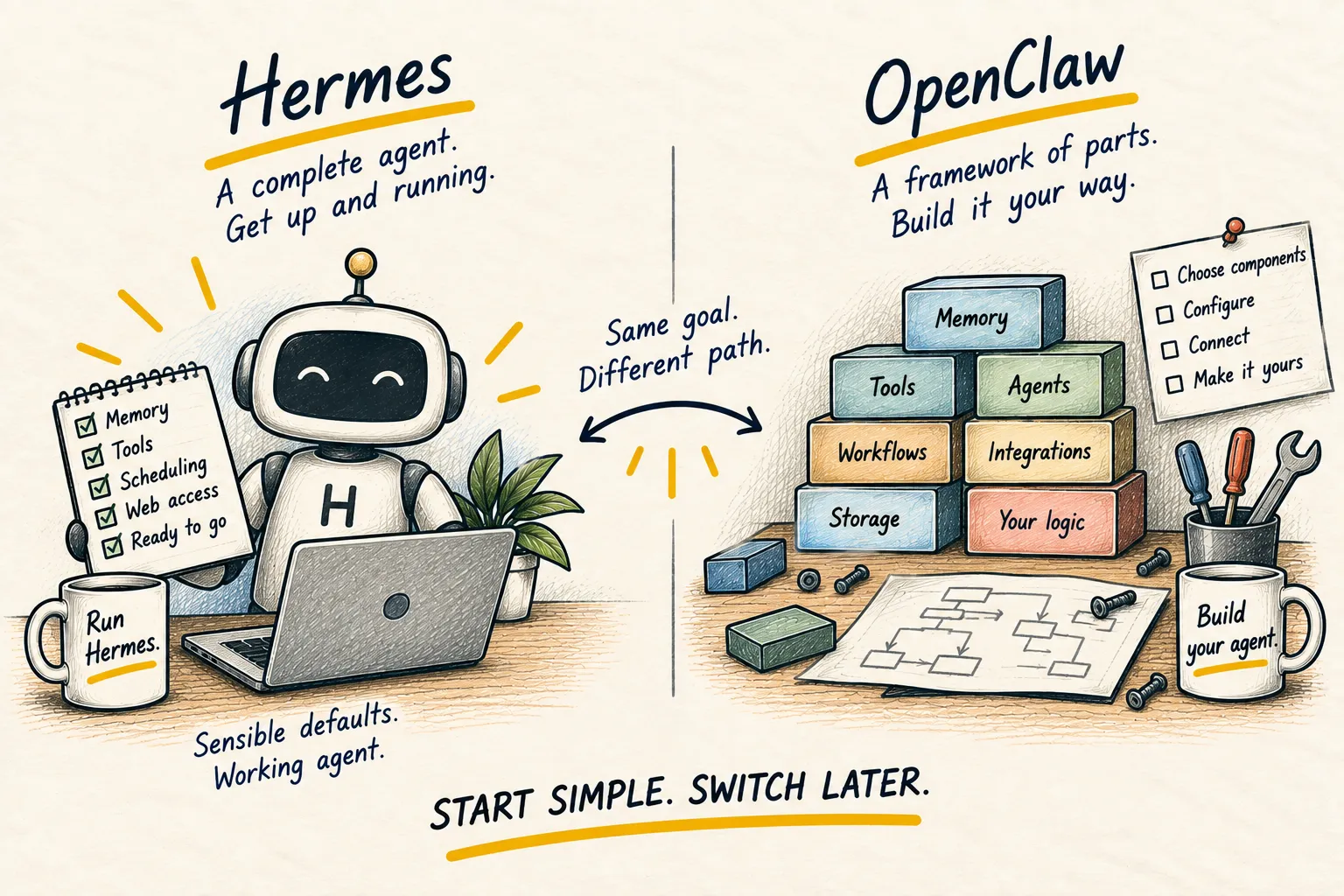
Choose Hermes if you want an agent running this week and are happy with sensible defaults.
Read my notesOpenClaw
Choose OpenClaw if you already know how you want an agent to behave and the defaults keep getting in your way.
Read my notesBottom line
Most people should start with Hermes. You will learn more from a working agent than from a better-designed one you never finish.
Side by side
| Hermes | OpenClaw | |
|---|---|---|
| Time to something working | An afternoon, following a guide | Longer: you make design decisions first |
| How much you decide | Mostly configuration | Architecture, memory strategy, tool wiring |
| Documentation | Task-shaped: here is how to do X | Reference-shaped: here are the parts |
| Memory | Built in, opinionated | You choose and connect it |
| Improving its own setup | Writes, refines and retires its own skills by default | Possible, but you design that loop yourself |
| Best for | Running an agent | Building an agent |
- Time to something working
- How much you decide
- Documentation
- Memory
- Improving its own setup
- Best for
Both of these let you run an AI agent on your own hardware. The difference is not really technical, it is about how much of the design you want to do yourself.
The short answer
If you want an agent doing something useful this week, use Hermes. It makes decisions for you, and its decisions are reasonable.
If you have already run an agent, know exactly how you want memory and tool use to work, and keep hitting the edges of someone else’s opinions, OpenClaw hands you the parts.
Why “start simple” is not a cop-out
The hard part of an agent setup is not the software. It is working out what job you actually want done, and that only becomes clear once something is running and disappointing you in specific ways.
Starting with the framework that makes you decide everything up front means making those decisions at the exact moment you know least. Starting simple and switching later is both easier and better informed.
The bit that compounds
Hermes comes with a skills loop already running. When a job keeps coming back, it can write itself a skill for it, revise that skill once it learns which version actually works, and retire the ones that have stopped earning their place. Nothing is being retrained and the model is not getting cleverer. It is closer to a colleague keeping a folder of notes on how your work gets done.
The practical effect is that the setup gets more useful the longer you use it. After a few months you have a set of procedures shaped by your own corrections, and a better chance that a familiar task comes out right without you walking the agent through it again.
OpenClaw can be arranged to do much the same thing. The difference is that you would be designing the loop: deciding where skills live, what prompts one to be written, and what causes one to be dropped. With Hermes that arrives on day one, before you have any opinions about it.
What would make me switch
Memory, and specifically how much of it is shared. Hermes keeps memory per bot by default, which is the right call for isolation and the wrong one for the way I have ended up working: I want a correction or a skill to be available everywhere rather than trapped in whichever bot happened to learn it. Today I get there by running fewer bots, which is what my current setup describes. If the built-in approach kept being wrong for how I work, that would be a structural problem rather than a settings problem, and that is the point at which assembling your own becomes worth the effort.
If you are still unsure
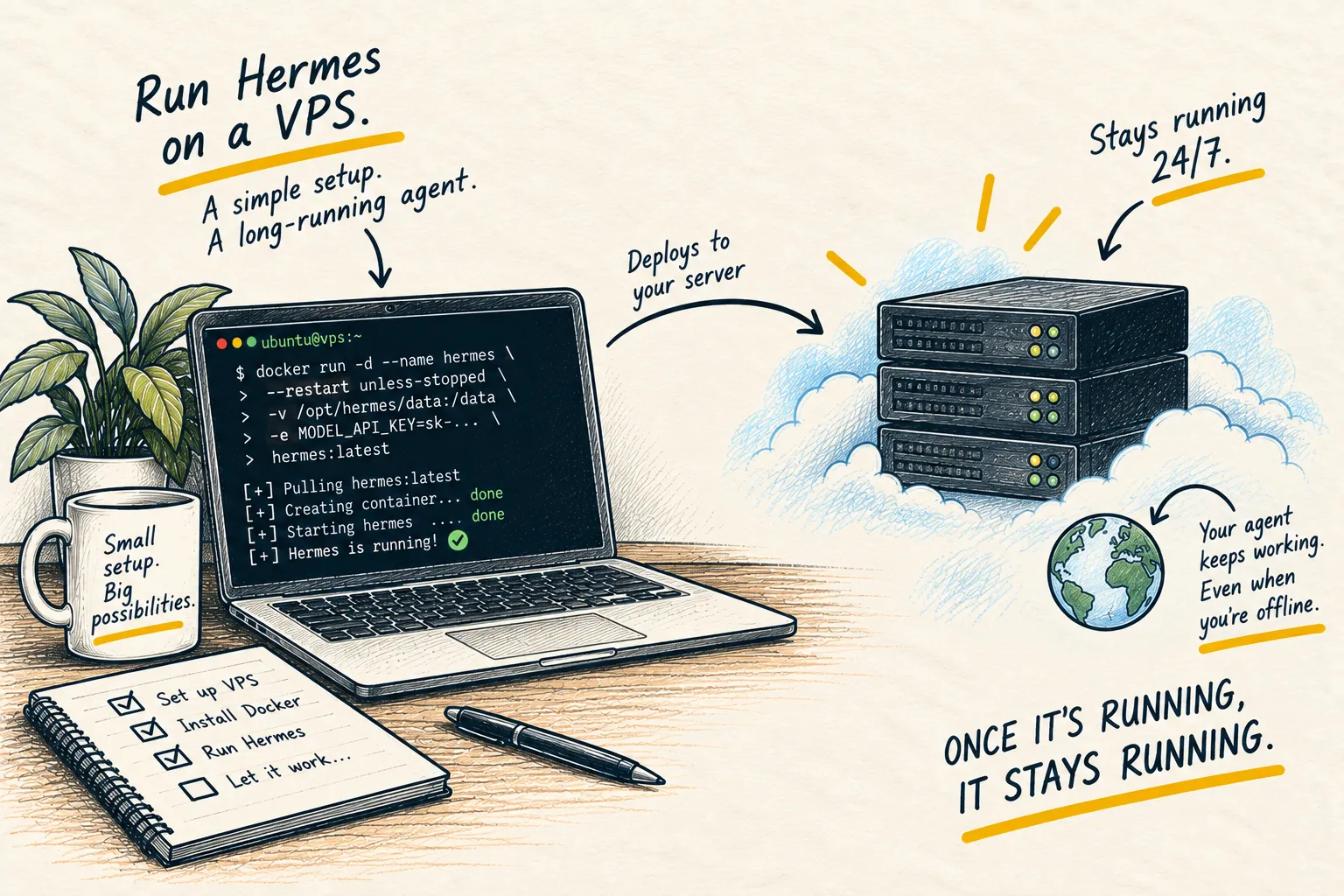
Run the VPS guide. Worst case you spend an afternoon and about five dollars, and you come out knowing what you actually want, which is worth more than the right answer to this question. If you would rather not rent a server at all, Hermes Agent now also has a desktop app for Apple Silicon Macs and Windows 11 (how to install it, or the official install docs).
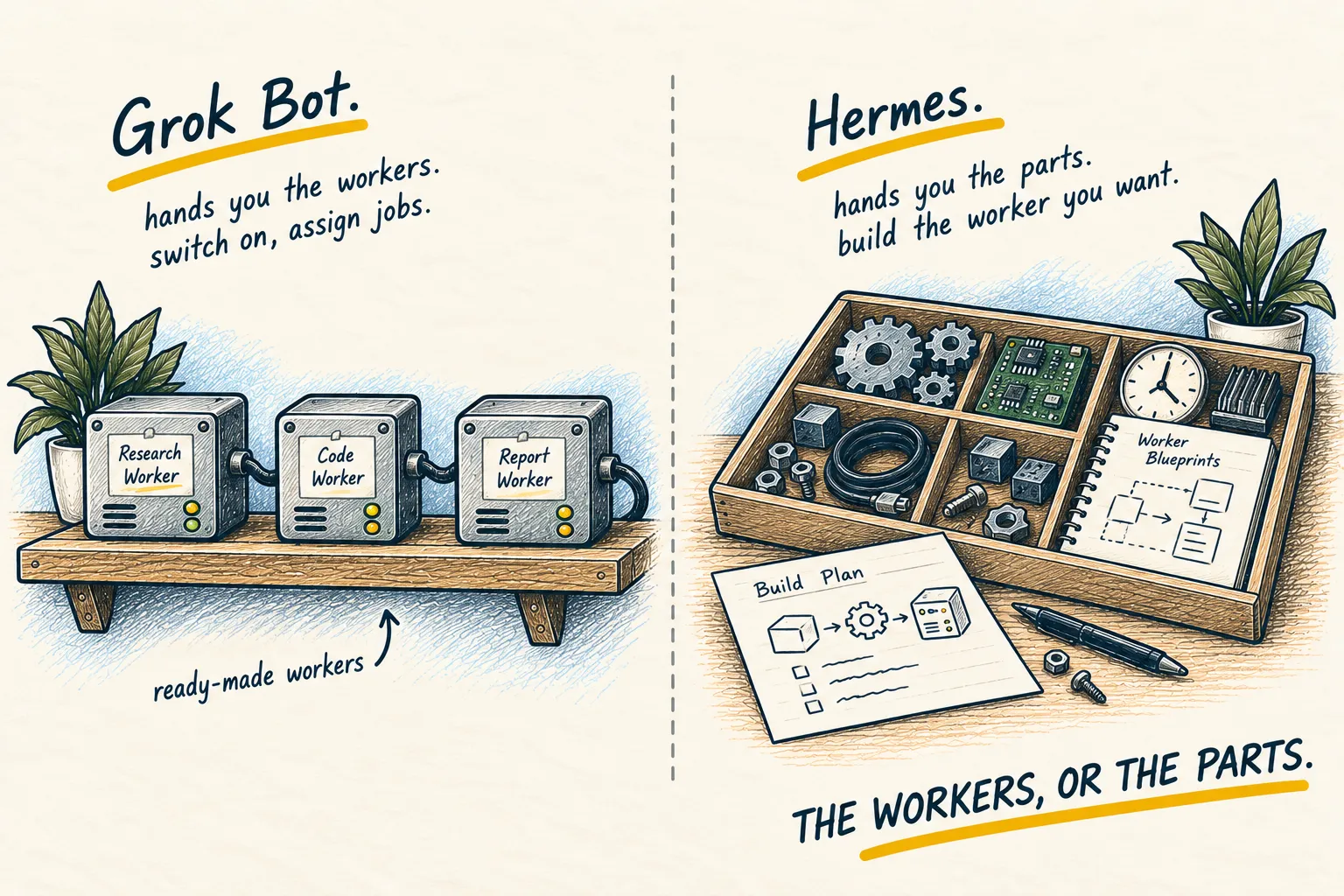
If hosting anything at all is the part you were hoping to avoid, that is a different question with a different answer: Grok Bot vs Hermes covers the managed side, where somebody else keeps the machine alive.
Common questions
Can I switch later?
What about Claude Code?
Is one more secure than the other?
What to do next
Related reading
Setups
My current AI setup