Grok Bot vs Hermes: which AI worker setup?
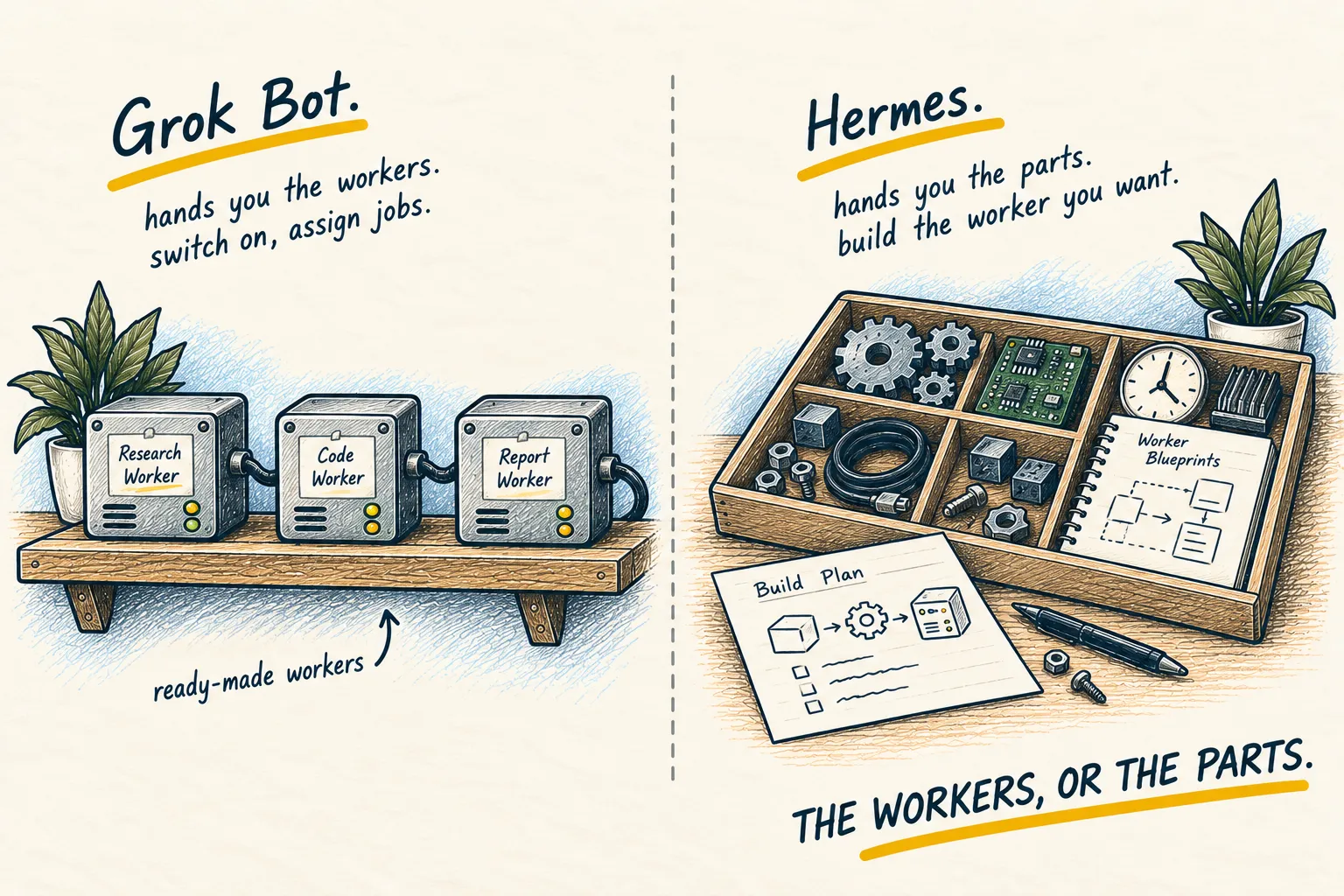
Both run persistent AI bots with roles, tools and scheduled work. One hands you the workers, the other hands you the parts. A practical comparison.

By Nick
On this page
Before you start
Learn
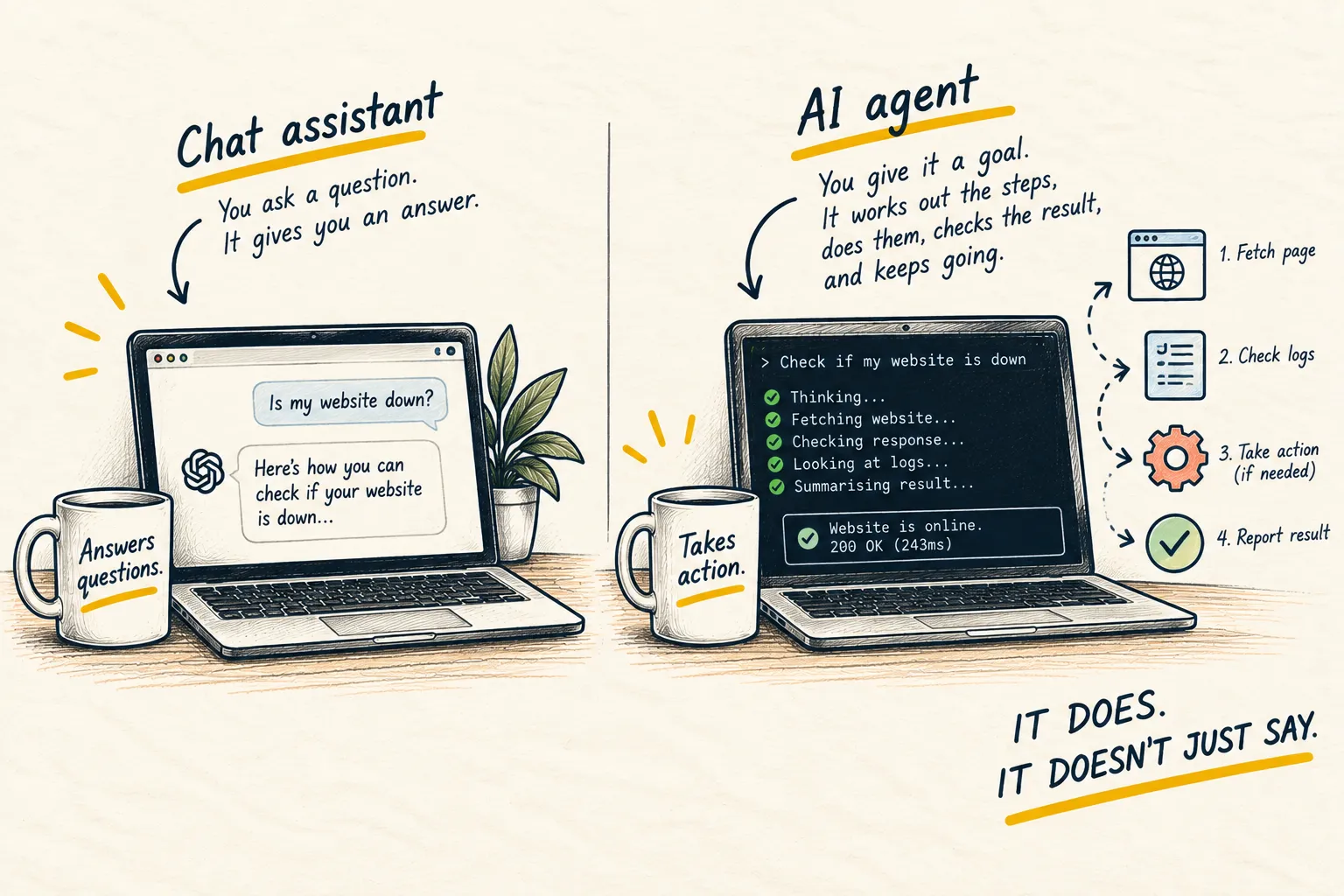
What is an AI agent?
Grok Bot
Choose Grok Bot if you want bots doing work this week and have no interest in running the machine underneath them.
Read my notesHermes
Choose Hermes if you want to pick the model, keep the data, and still have the setup when you change your mind about a vendor.
Read my notesBottom line
Grok Bot gives you the workers. Hermes gives you the parts. The question underneath is who owns the orchestration layer, how much shared state you want, and whether you would rather pay a plan priced by how much runs in parallel or run a cheap runtime that calls in expensive help only when the work is real.
Side by side
| Grok Bot | Hermes | |
|---|---|---|
| Setup | Describe the bot in a product you already pay for | Install and configure it on a machine you provide |
| Hosting | xAI runs it; nothing to keep alive | Your computer, server or VPS, kept alive by you |
| Model choice | xAI's models | Whichever model you point it at |
| Multiple bots | Several bots in one shared environment | Separate profiles you run alongside each other |
| How bots talk | Bot-to-bot messaging inside the product | Supported, but you decide the wiring |
| Memory | Managed, and shared ground is the default | Per profile; built-in memories are not shared automatically |
| Computer access | Cloud computer with browser, terminal and files | Whatever the host machine and your tool choices allow |
| Scheduled work | Routines and tasks, managed for you | Routines you configure, running on your host |
| Customisation | Deep within the product's shape | Open-ended; you can change the code |
| Orchestration | The product decides what runs and when | You wire it up, and you own the failures |
| Cost shape | Plan-priced; tracks how much runs in parallel | Cheap runtime, plus model calls when work is real |
| Portability | Tied to the xAI account | Moves with you; open source |
- Setup
- Hosting
- Model choice
- Multiple bots
- How bots talk
- Memory
- Computer access
- Scheduled work
- Customisation
- Orchestration
- Cost shape
- Portability
Both of these do the same broad thing. You create a bot that sticks around, give it a role, some tools and jobs it picks up on a schedule, and let it talk to your other bots. Neither is a chat window you have to sit in front of.
Where they part company is what you are responsible for. With Grok Bot you operate workers. With Hermes you operate a system.
The bit people miss: who owns the environment
Almost every argument about these two is really an argument about the environment.
Grok Bot’s bots share one. They work in the same hosted computer, they see the same files, and coordination is something the product does rather than something you arrange. Hand a job to one bot and another can pick up where it stopped without you building a handover.
Hermes starts from the other end. Each bot is a separate profile with its own memory, configuration, skills, credentials and conversations. Built-in memories are not shared between them, so by default one bot learning something does not mean the others know it.
Which of those you prefer depends on the job. Shared context is brilliant when the bots are colleagues on one project. Separation is brilliant when one bot holds client credentials and another is doing something you would rather it never learned about. Split on blast radius, not on job titles.
The fewer-bots lesson
This is the part I got wrong. Both products make a team of bots feel like the obvious move: a researcher, a writer, a reviewer, passing work along. Hermes supports several bots, so I built several, and over a few months I collapsed most of them back into one.
The team was not failing at the work. What the team learned got stranded. A correction I made to one bot stayed with that bot, and a skill another bot worked out for itself was invisible to the rest. I ended up with four bots that each knew a quarter of what I had taught them.
Three things fixed it, and they are worth keeping apart because they fail differently. Shared memory means a correction only has to be made once, so the job that runs in June already knows what I explained in March. Skill reuse means a procedure written for one task is available to every other one, instead of each bot rediscovering how to publish to this site. Configuration sync is the boring one that actually bites: model choice, tool access, spending limits and tone live in one place rather than five, where you will update one and move on.
So what works for me now is one capable bot, a lot of task-specific skills, and one memory behind all of it. The tasks stay separate. The context does not. Both products can do either; they just nudge you differently by default.
The cost question, at the level you actually work
Two things are worth separating here, because the sticker price is the less interesting one.
At the time of writing, Grok Bot has been bundled with the Cursor plan. If you already pay for that, you may be able to try it without buying anything new, which makes the “just try it” advice much cheaper than it sounds. Check the current plan before you count on it. Bundles get added and withdrawn without much warning, and this sentence will go stale before the product does.
For me it would still be the expensive option, and that is not about the price of the plan. I run more than five projects in parallel, and each wants its own orchestration, bots and scheduled work. A managed environment is priced, one way or another, by how much you have running at once. How much I have running at once is precisely the problem.
So I split the job in two: a cheap model that is awake all day deciding whether anything needs doing, handing off to a frontier worker when something genuinely needs thinking. My current setup is that arrangement written out in full.
It is not free or automatic. You decide what counts as hard enough to escalate, and getting that wrong in the cheap direction gives you a runtime that confidently does the wrong thing for a week before you notice. If you run one project, the arithmetic does not work and a managed plan is better value than my weekend.
Where I would actually draw the line
Four questions settle it for most people.
Does the data have to stay somewhere specific? If yes, that is the end of the discussion. Self-host it.
Do you want to choose the model? Grok Bot’s answer is xAI’s models. If you want a different one for cost, for capability or for something you run locally, Hermes is the one that lets you.
Who should own the orchestration? Something has to decide what runs, when, and who does it. Grok Bot’s answer is that the product owns it, and you get both the convenience and the bill. Hermes’ answer is that you own it, which buys you a cheaper runtime and costs you the first night something loops at 3am. How many bots you end up with is downstream of that choice.
Do you enjoy this? Not a soft question. Running your own agent infrastructure is real, recurring work. If tinkering with it is the fun part, Hermes pays you back in control. If it feels like a chore standing between you and the work, a managed environment is worth the money.
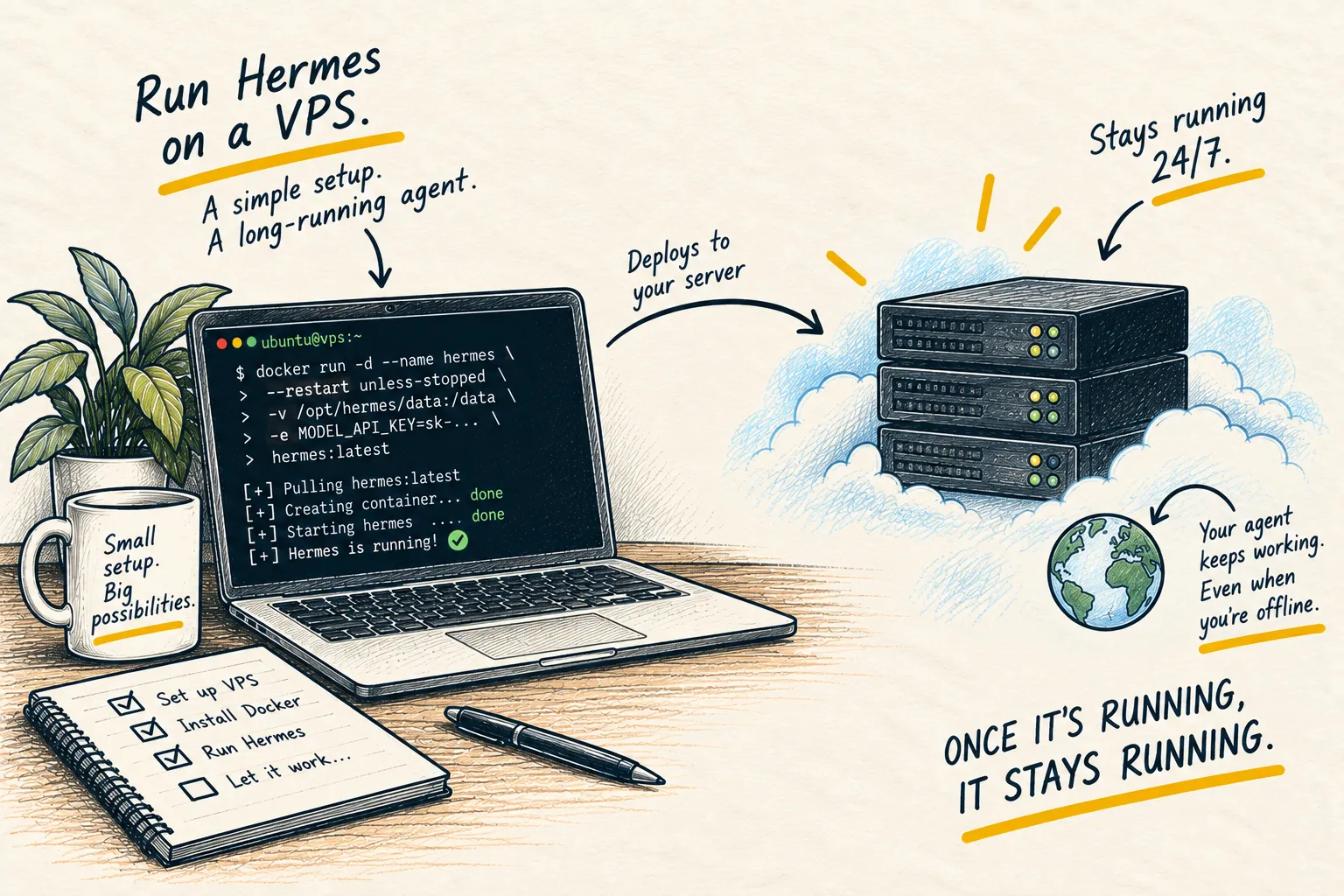
If you cannot answer those yet, start with the one you can abandon cheaply. A month of a managed product tells you what you actually want bots to do, which is the expensive knowledge, and it moves with you if you later decide to own the system. Going the other way, the VPS guide costs an afternoon and about five dollars.
Common questions
Can Hermes bots share memory or an environment?
Do I need a server for Grok Bot?
Which one is cheaper?
Is it better to run one bot or several?
Can I run both?
What to do next
Related reading
Setups
My current AI setup