Hallucination, decoded
The word everyone uses for AI making things up, in one page: what it is, why it happens, where it happens most, and the two habits that catch it.

By Nick
On this page
Before you start
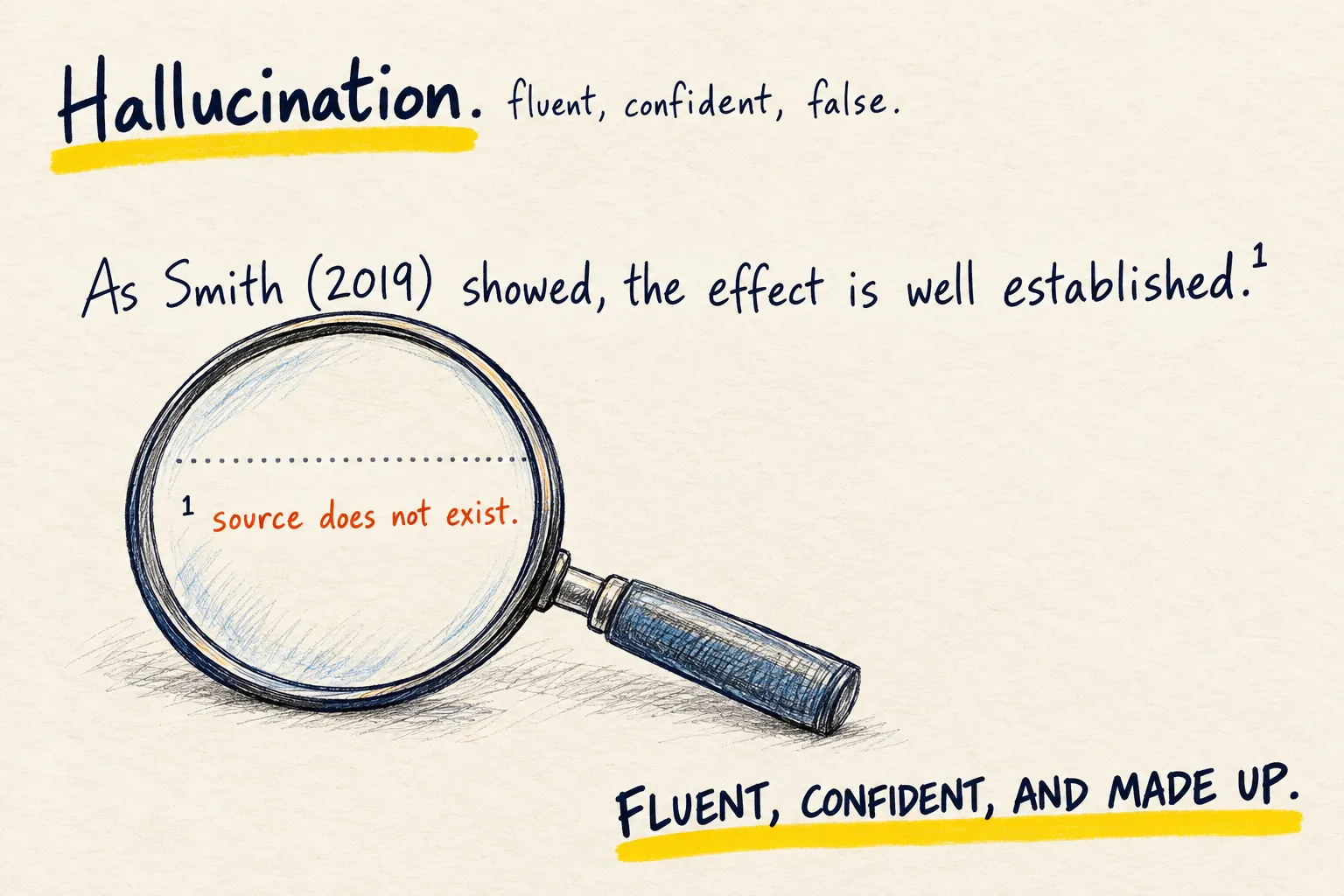
A hallucination is when the AI gives you something that is fluent, confident and false. A date that is wrong. A quote nobody said. A book that does not exist, with a plausible author and a plausible year. A link that goes nowhere.
Why it happens
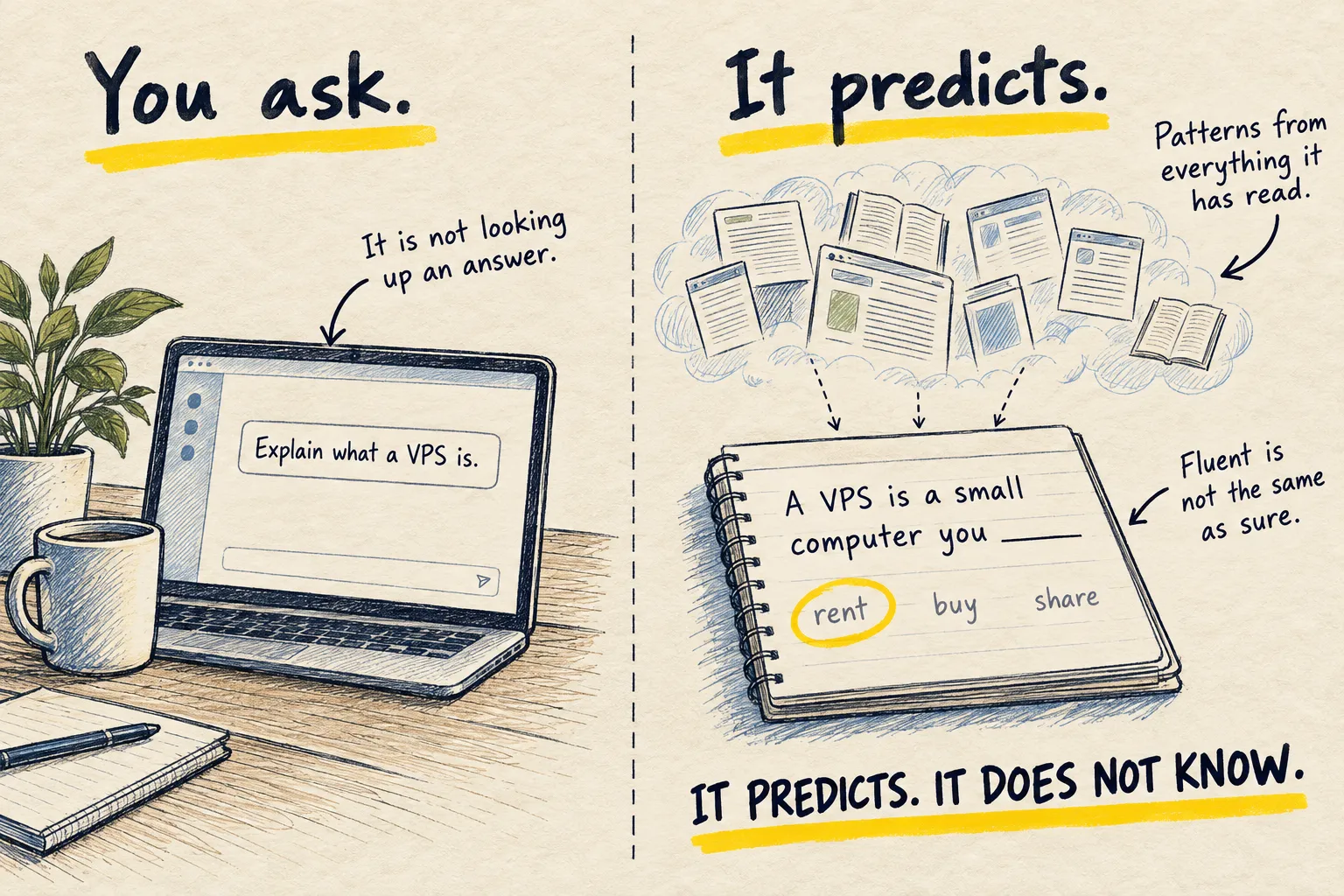
The model (the AI system that writes the replies) predicts what should come next. When it has seen a thing ten thousand times, the prediction is a fact. When it has seen it twice, or never, the prediction is still a confident-looking sentence, because confident-looking sentences are what it learned. The shape of an answer survives even when the content does not.
Where it happens most
- Specifics. Numbers, dates, prices, names, citations, URLs.
- Niche subjects. A small company, a local rule, an obscure person.
- Recent things. Anything after the model was trained, unless it searched.
- Things you asked for confidently. “What did the 2019 report say?” invites an answer even if there was no 2019 report.
Explanations and general advice are mostly safe. The specific figure inside them is the risk.
The two habits that catch it
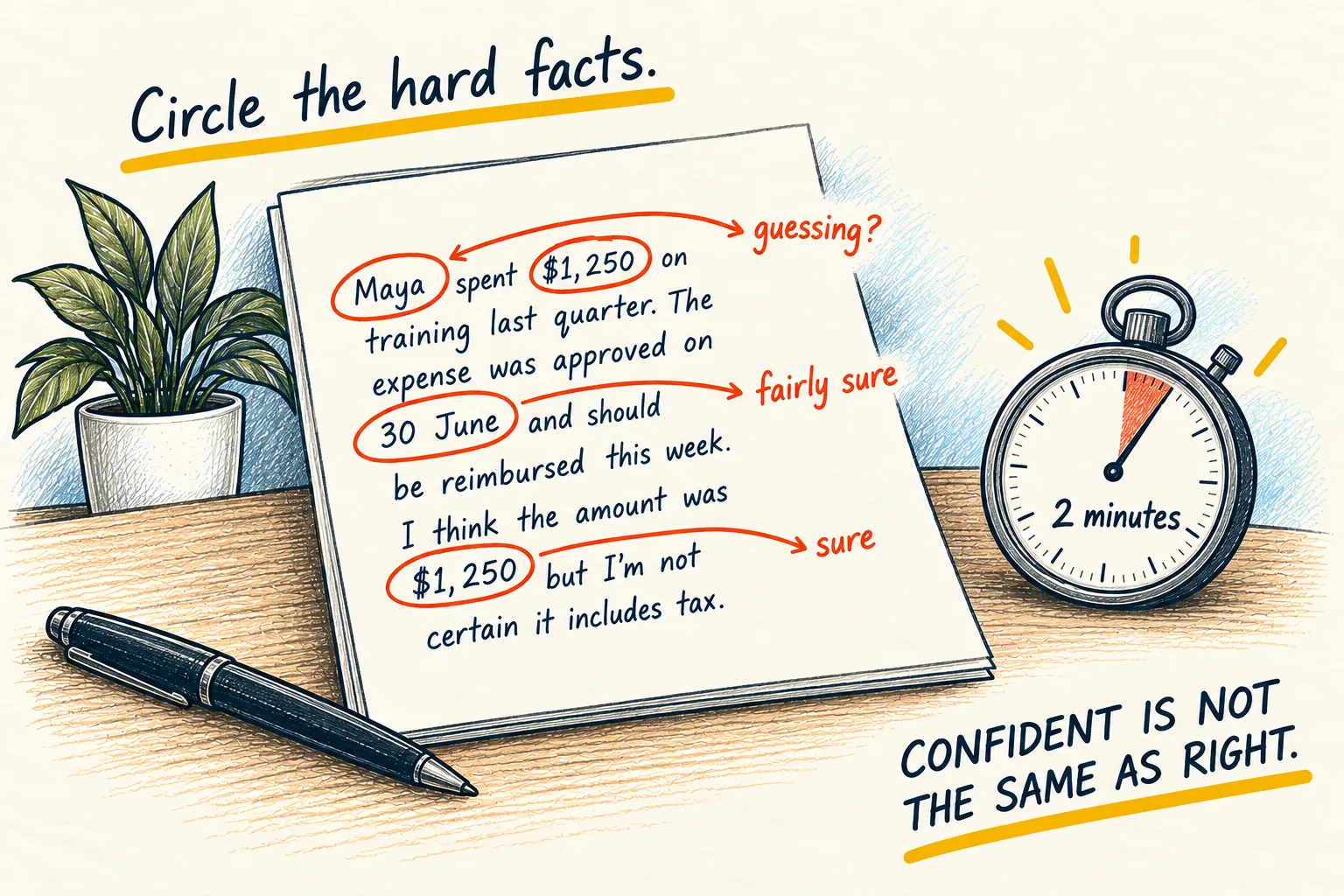
Ask how sure it is, every time it matters. And give it the source instead of trusting its memory: the actual letter, the actual document, the actual page. A model reading your file is far more reliable than a model recalling the world.
Which parts of that answer are you confident about, and which are you reconstructing from
patterns rather than from something you actually know? Be specific.A follow-up after an answer about a bakery's history, plus the prompt above
Confident: bakeries generally use yeast, and the basic bread process.
Fairly sure: that it opened in the 1950s.
Reconstructing: the founder’s name and the exact year. I would check those.
The 'check' items are the ones to look up.
The two-minute check is the whole routine.