What is AI, actually?
The plain-English guide to prediction, training data and using AI to learn what you do not yet know.

By Nick
On this page
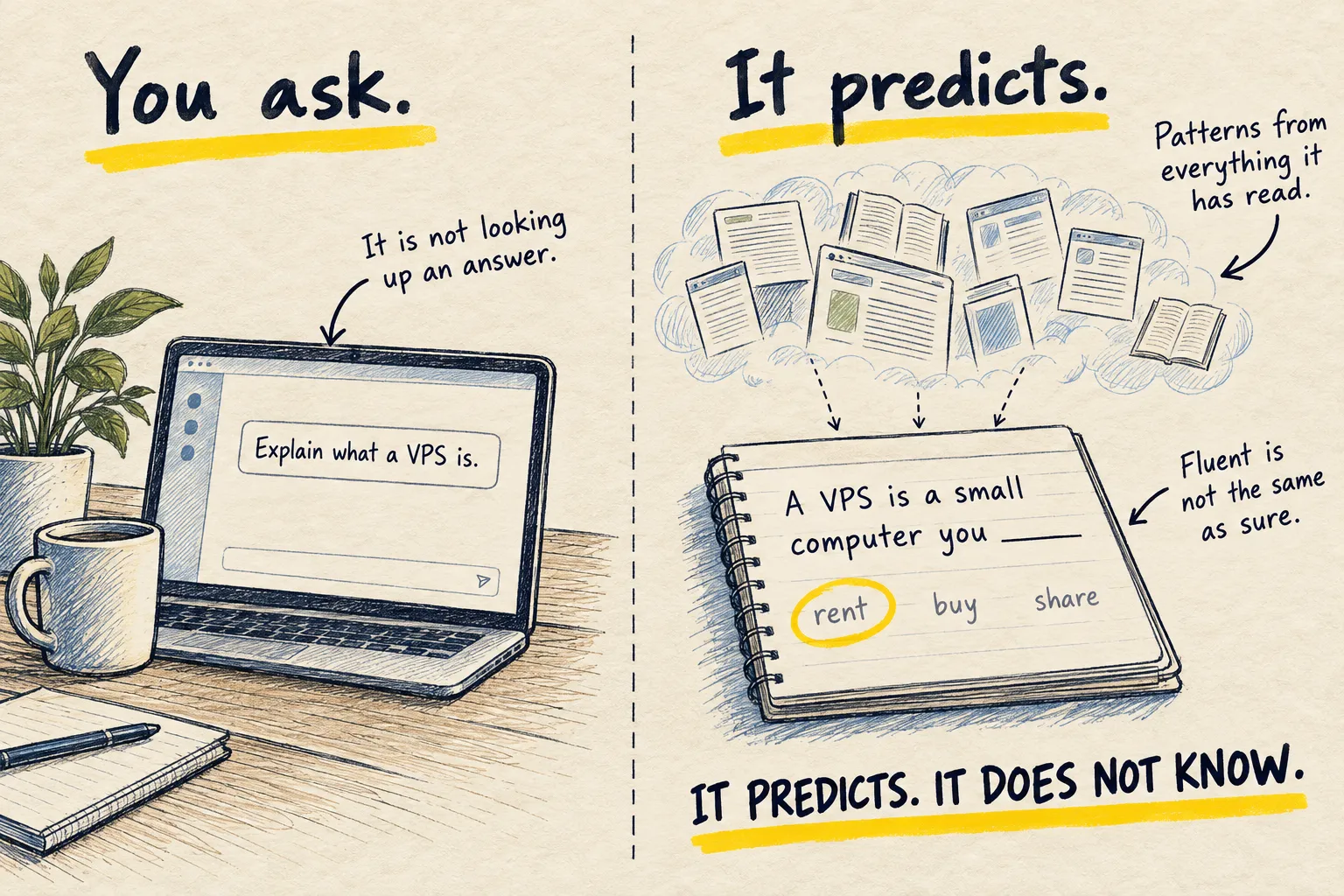
AI is software that has learned patterns from examples and uses those patterns to predict what should come next. That is the whole trick. It can write an email, explain a difficult subject, review code or help plan a project, and all of it comes from the same mechanism.
AI predicts what comes next
When you type a question into a chatbot, the system is not opening a tiny library inside your computer and retrieving a perfect answer.
It is processing your words and predicting a useful sequence of words that should come next. Then it predicts the next sequence after that. And the next one. It does this very quickly, which makes the result feel like a conversation.
You ask:
Explain what a VPS is.
The model (the AI system that writes the replies) recognises patterns associated with explanations, servers, websites and virtual machines. It then predicts a response that fits those patterns. It is not looking up a guaranteed definition every time.
That is why a reply can sound clear and still be wrong. The model is predicting a plausible pattern, not searching for truth by default.
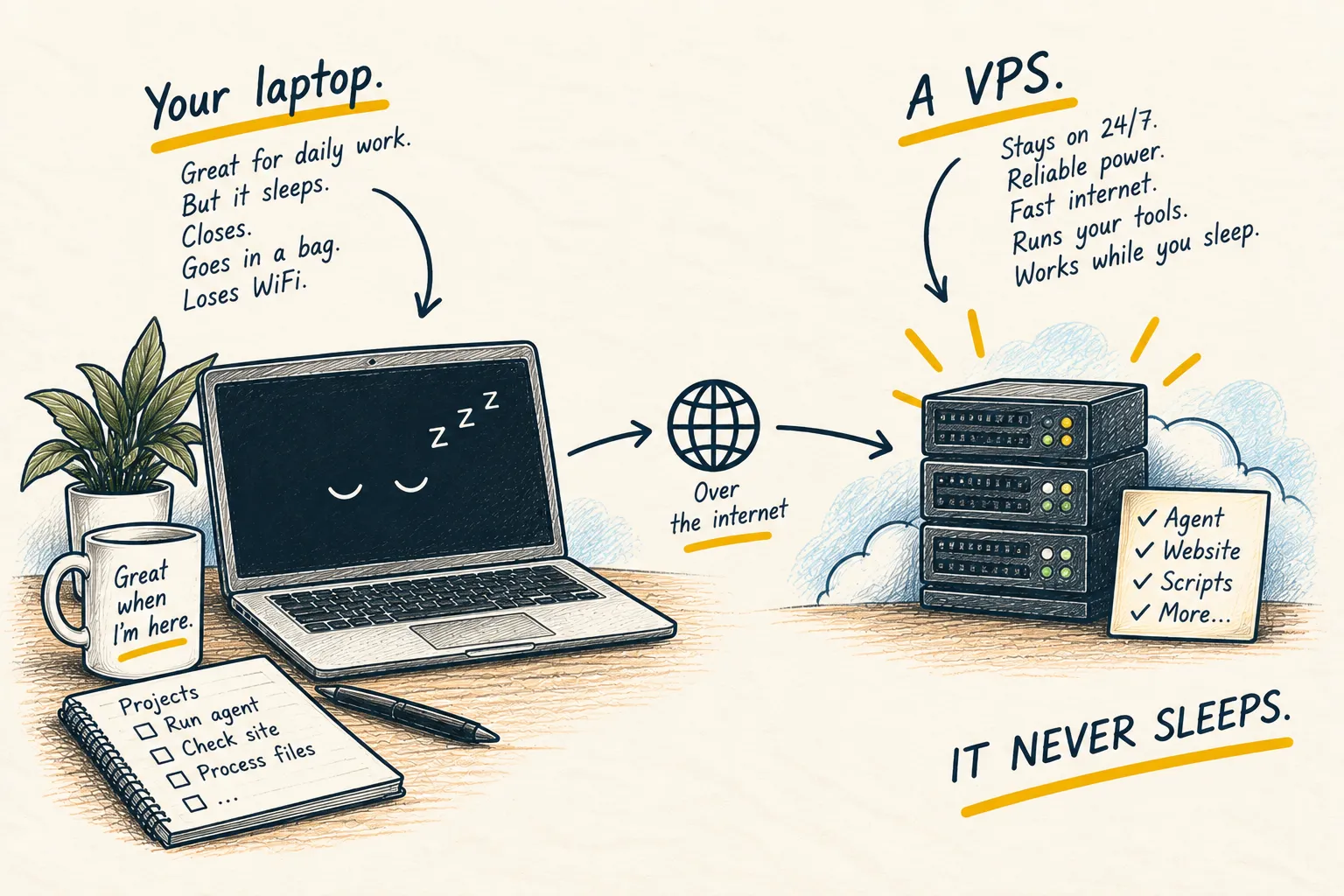
If the term itself is new, we have a plain-English page on what a VPS is.
AI learns patterns from training data
Those patterns come from training data: books, websites, articles, code, conversations, images and other material, depending on the model. The model does not store the internet like a searchable database. It learns from the material it was exposed to.
It has seen far more examples of some subjects than others. Common topics such as writing emails, popular programming languages or widely used software often have many overlapping explanations to draw from. A small project, obscure person, niche technical problem or brand-new event may have far fewer reliable examples.
With less to anchor the prediction, there is more room for uncertainty. That does not make obscure questions impossible to answer. It means the model may need more help from you: the documents, examples and details that were not in the original training material.
Why AI can sound like it understands
AI has learned the patterns of language, including the shape of a good explanation. It knows how a confident answer usually sounds.
That is not the same as knowing the subject.
When the pattern is weak or the question is underspecified, the model can fill the gap with fluent, plausible language. This is the source of hallucinations: invented details that fit the shape of an answer without being anchored in solid material.
How to use it well
Stay involved. State the goal, give it the context and source material you have, and explain what you already know. Then ask it to identify assumptions, missing steps and anything it cannot determine confidently. Request sources when accuracy matters.
Then check the result, and make the final decision yourself. Watch for invented details on obscure subjects, for answers to a slightly different question from the one you asked, and for information that is simply out of date. Numbers, dates and code are easy for it to get slightly wrong while still looking tidy.
Find the gaps you cannot see
One of the most useful ways to work with AI is not asking it to do an entire task for you. Give it something you already understand and ask it to find what you missed.
The things you know are easy to work with. The things you know you do not know are usually easy to look up. The difficult category is the things you do not know you do not know.
Imagine you have already written a project plan. You could ask:
Review this plan like an experienced project manager. What risks, dependencies or missing decisions have I overlooked?
Or you finish setting up a website and ask:
Here is what I changed. What important checks have I missed before launch?
Or you write a piece of code and ask:
Explain what this code does, then look for edge cases and assumptions I may not have considered.
If you want a practical walkthrough of that kind of work, see Claude Code for beginners.
Treat those suggestions as prompts for investigation, not automatic answers. The value is often in the new questions it gives you.
What generative AI can do
Generative AI creates new output from your instructions: text, images, audio, video, code, summaries and ideas. The output is new, but it is not created from nothing. The model uses patterns learned from previous examples to predict an output that matches your request. Think of it as a very fast pattern-based improviser.
It is most useful when a task involves language, patterns, comparison or large amounts of information. Typical uses include:
- Turning rough notes into a clear document
- Summarising a long article
- Comparing several options or generating possible approaches
- Explaining a technical subject
- Reviewing code and finding gaps in a plan
You provide the goal and the context. AI helps with the first draft, the heavy lifting or the second perspective.
Common questions
Is AI looking up answers in a database?
Why does AI sound so confident when it is wrong?
What is the most useful way to start?
What to do next
Learn
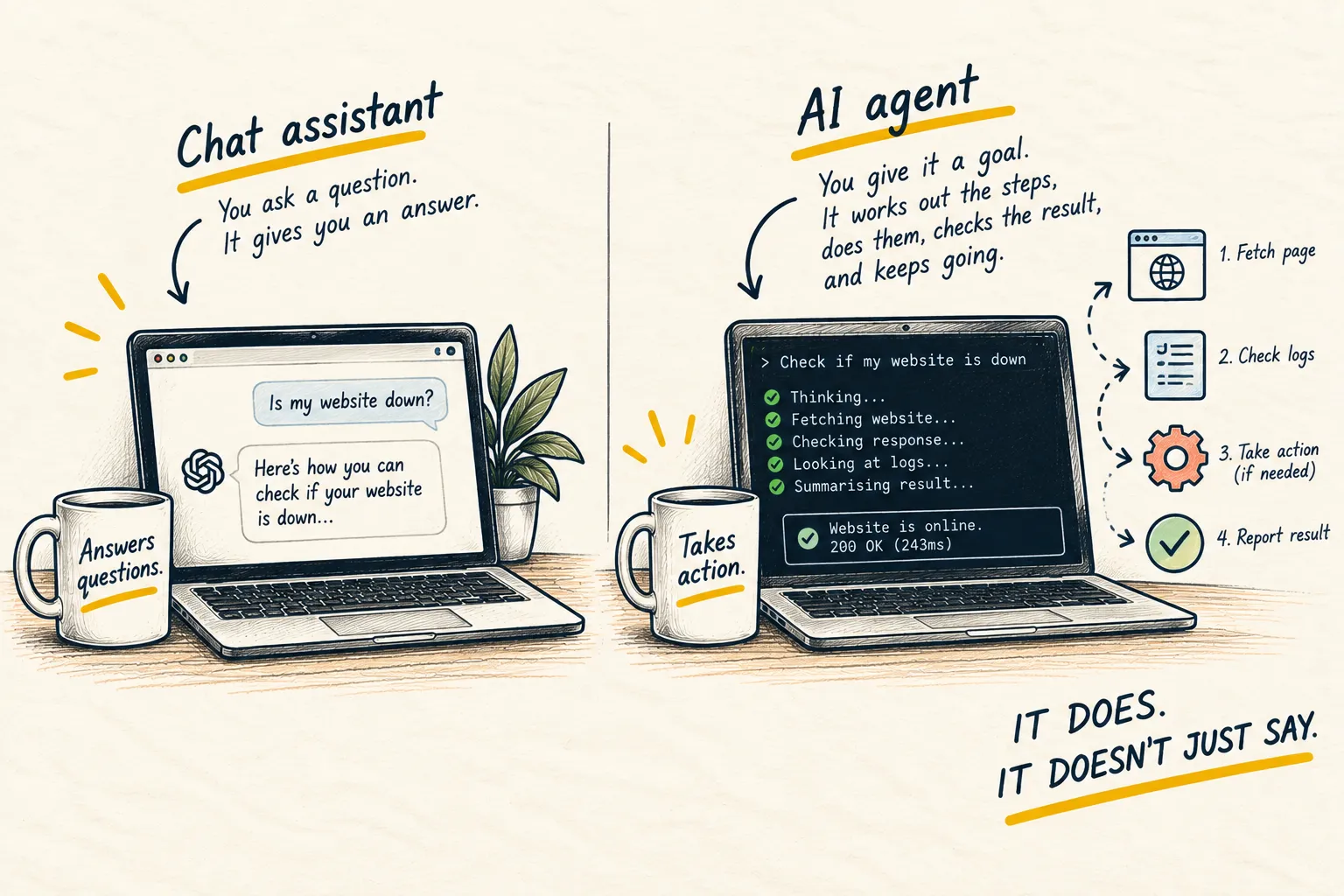
What is an AI agent?
Related reading
Learn
What is a VPS?
Learn
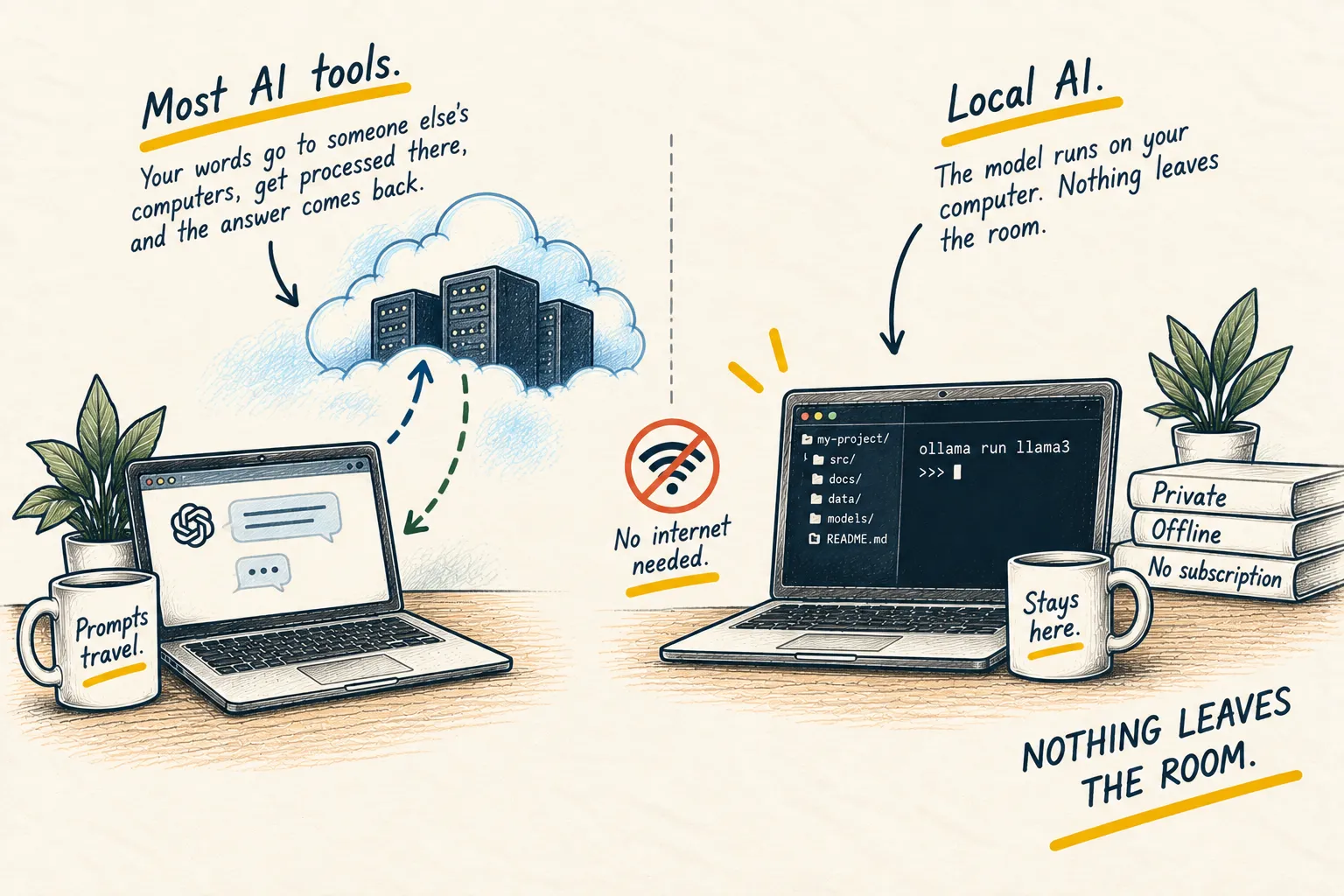
What is local AI?