Reasoning model, decoded
What is a reasoning model? It works the problem out before answering, so you see a pause. Good for maths, planning and tricky code. Is the wait worth it?

By Nick
On this page
Before you start
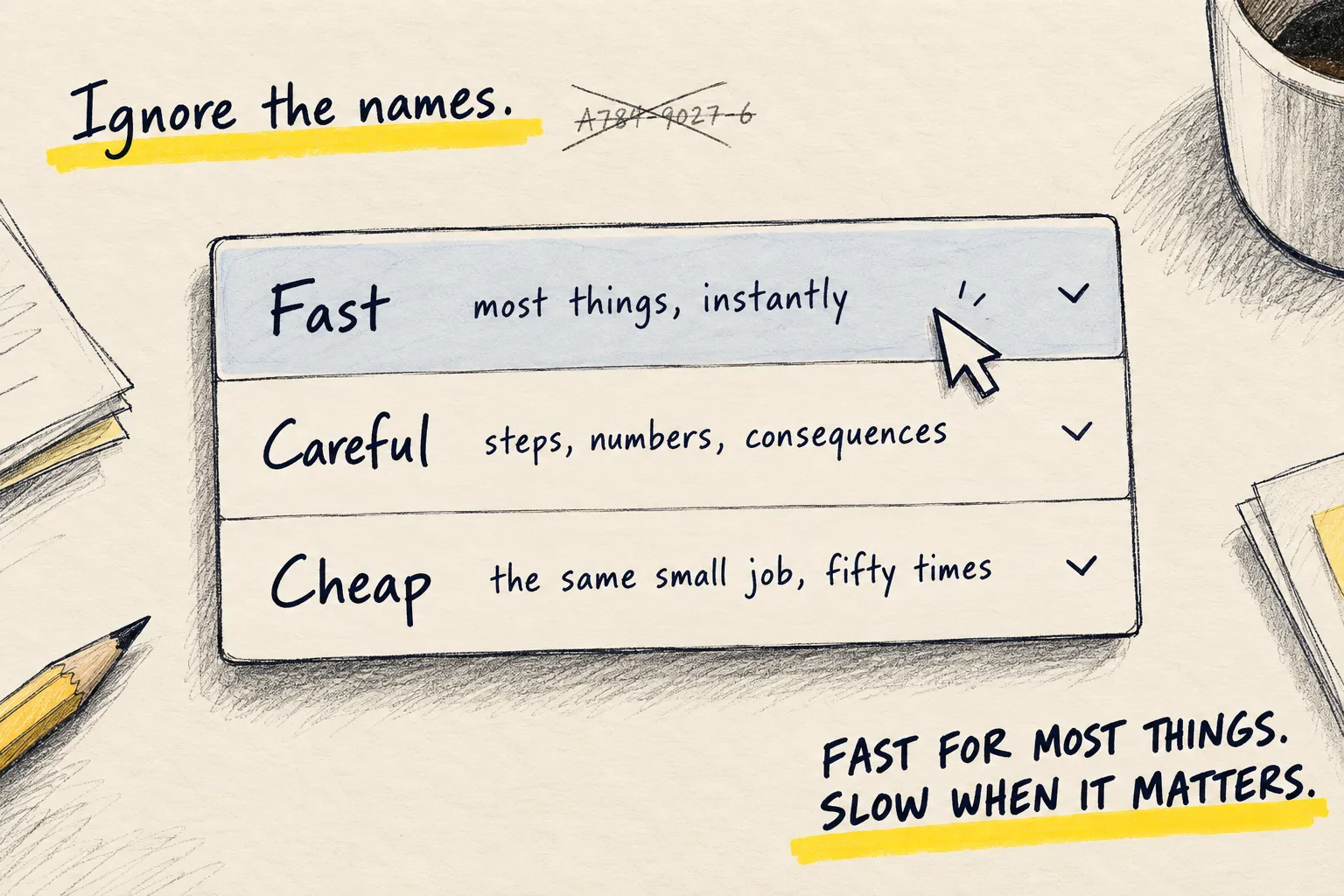
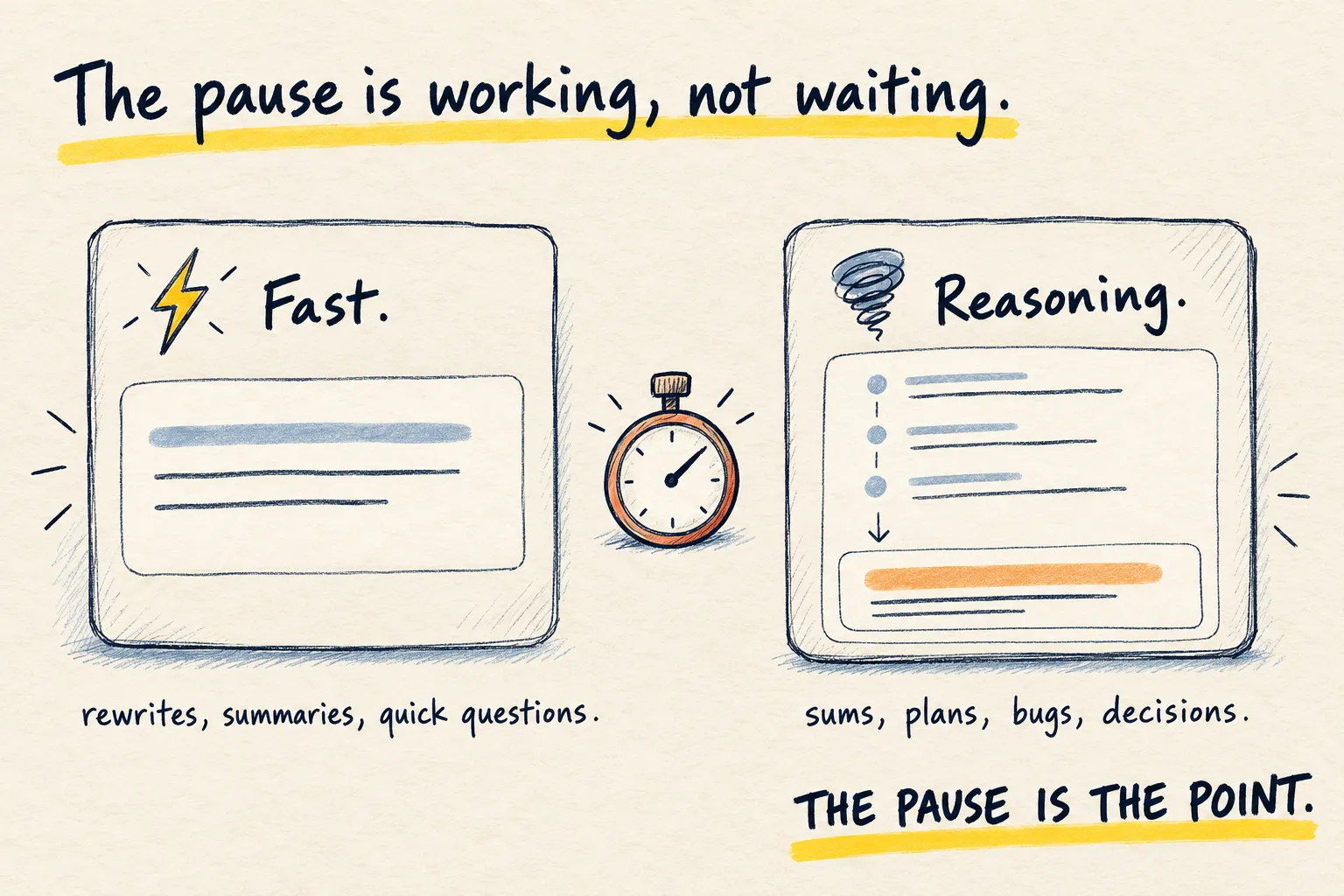
A reasoning model is one that works the problem out before it answers. You see it as a pause, sometimes with a line like “thinking”, sometimes with the working shown. Then the answer, usually better than the instant kind on anything with steps.
What the pause is
Writing out the working. Instead of predicting the answer straight away, the model predicts a chain of intermediate steps first, checks them against each other, and then answers. For a sum, a plan, a bug or a logic puzzle, that helps a lot. For “make this email friendlier”, it helps not at all and takes longer.
When the wait is worth it
- Numbers that have to add up.
- A plan with dependencies, where step three depends on getting step one right.
- Code that is broken and you do not know why.
- A decision with several moving parts.
- Anything where a wrong early move ruins the rest.
When it is not
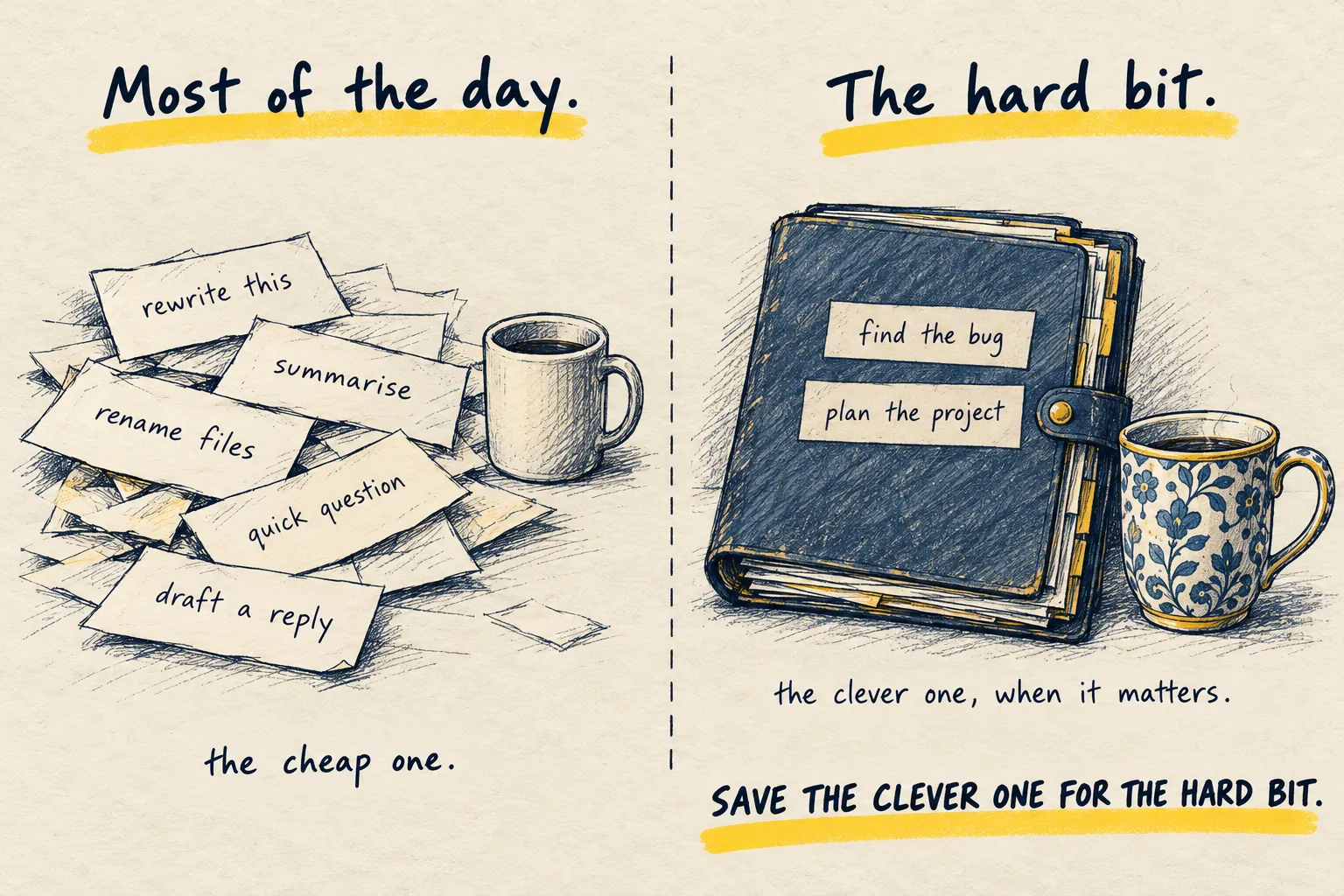
Rewrites, summaries, quick questions, drafts, names, the everyday pile. The fast model is as good and the cheap model is nearly as good. The which model page has the three-line rule.
If you are not sure which a question needs, ask the model you are on.
Before answering: would this question benefit from step-by-step reasoning, or is it
something you can answer well straight away? One line, then answer it the way it needs.Which of two quotes is cheaper over three years? plus the prompt above
Step by step: the numbers have to add up and one quote has a monthly fee.
- Quote A: $1,200 up front, nothing monthly. Total $1,200.
- Quote B: nothing up front, $45 a month for 36 months. Total $1,620.
Quote A is cheaper by $420.
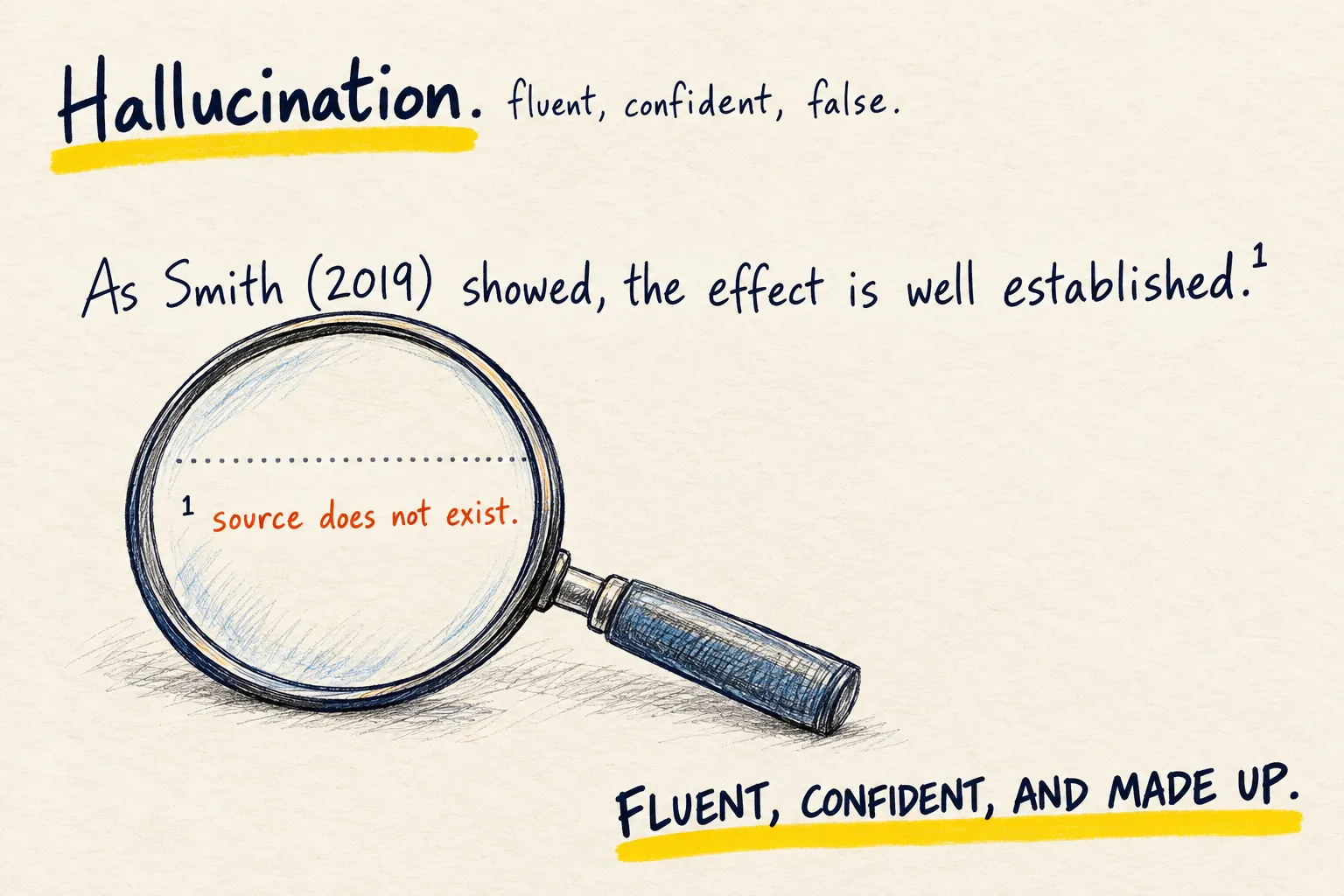
Read the working. A wrong early step is where a made-up answer hides.
The working is where the hallucinations show up, so read it.