Tokens and the context window, decoded
What is a context window, and what is a token? Two words behind most AI pricing and limits: a token is a piece of a word, the window is how many fit at once.

By Nick
On this page
Before you start
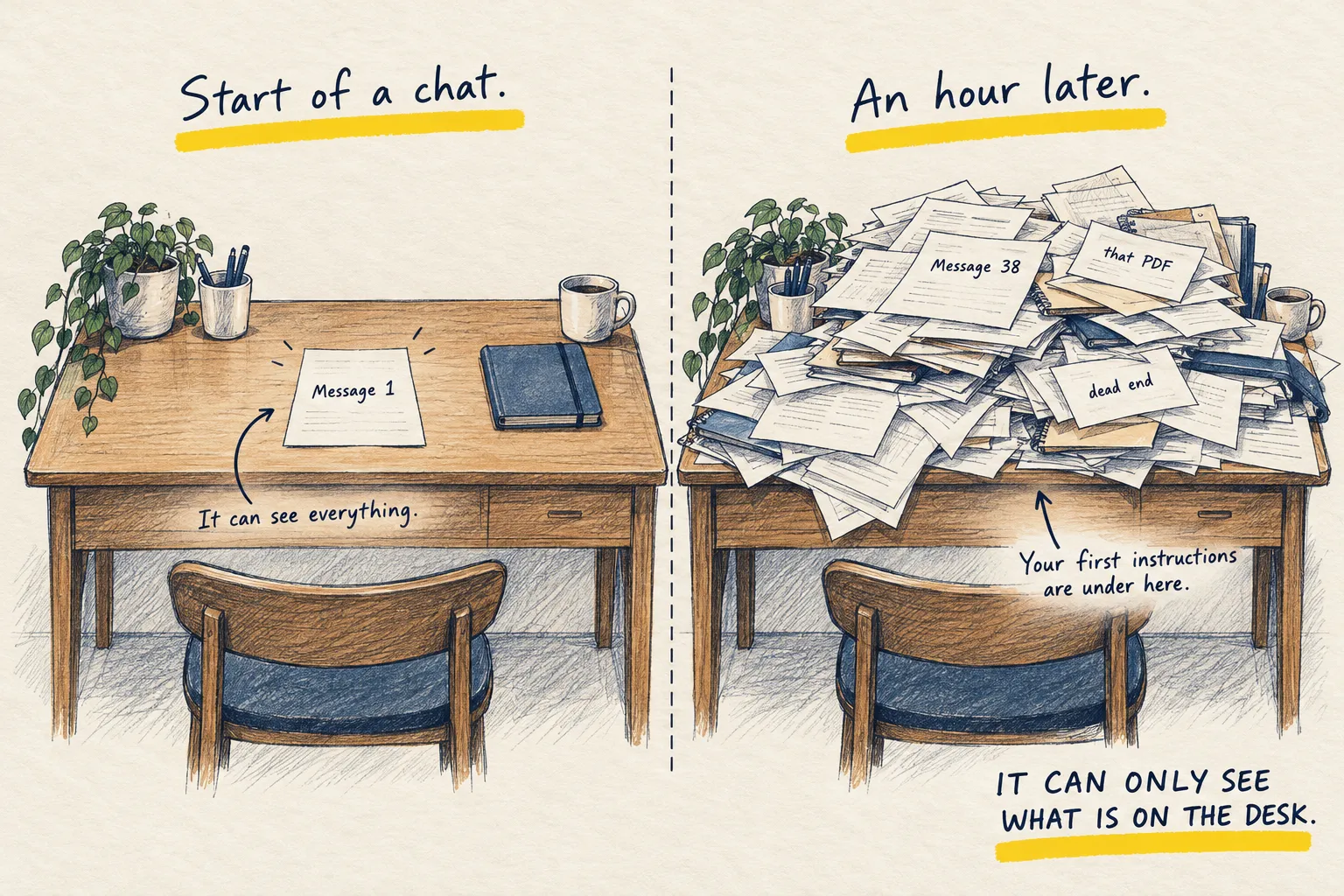
Two words sit under every AI price list and every usage limit. Once you know them, the numbers stop being mysterious.
Token
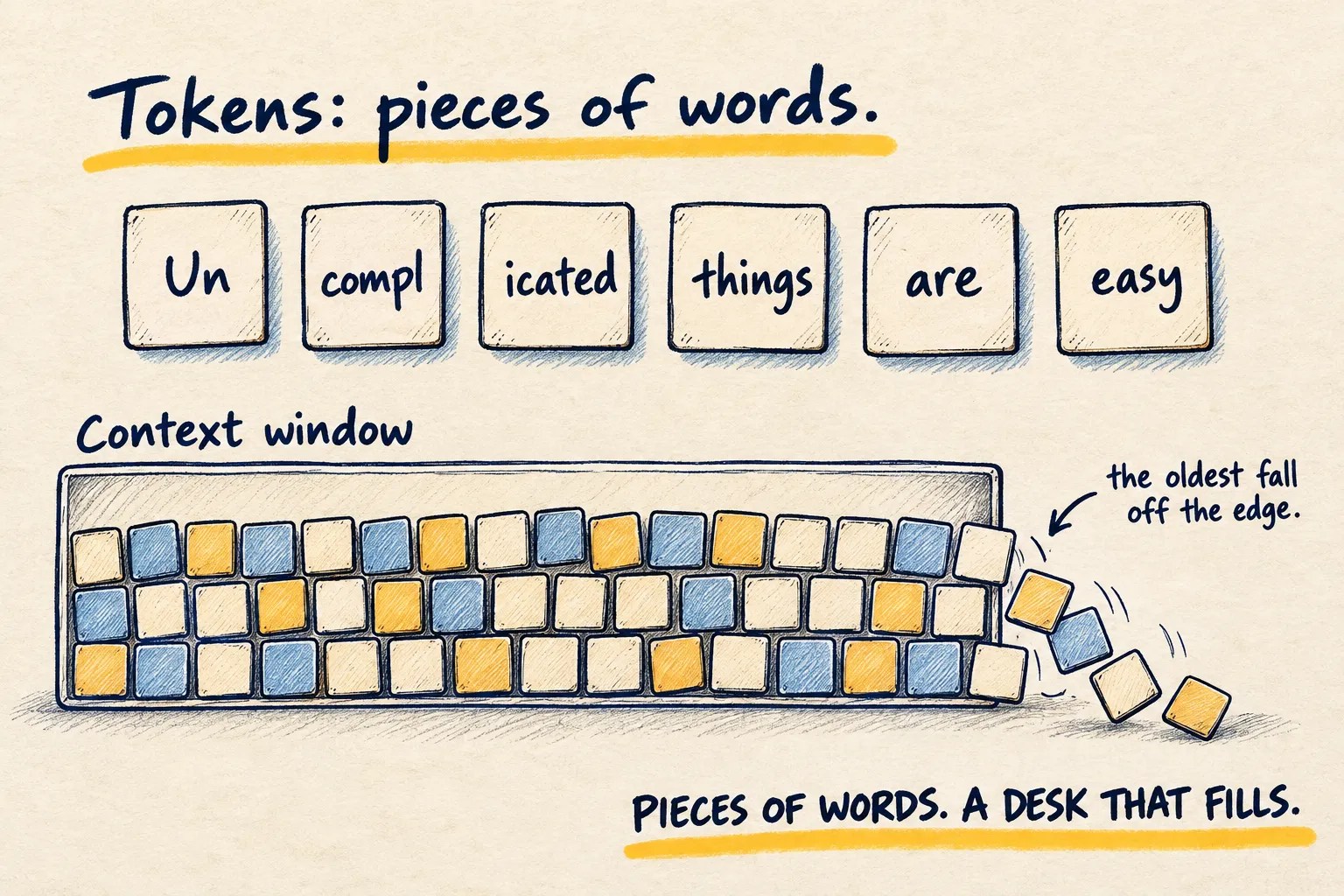
A token is a piece of a word. “Cat” is one token. “Uncomplicated” is three or four. A page of English is a few hundred. Everything you send and everything the model (the AI system on the other end) replies is counted in tokens, and that count is what you are paying for, whether per use or through a plan’s limit.
Paste a forty-page PDF and you have just spent tens of thousands of tokens before asking a question. That is why the same number of messages can feel cheap one day and expensive the next.
Context window
The context window is how many tokens fit on the desk at once: your messages, its replies, the files, the instructions. Every model has a fixed size. Fill it and the oldest things start falling off the far edge, which is why a long chat forgets its own beginning.
Bigger windows exist and they help. They do not help as much as you would think, because a model reading a huge pile is worse at finding the one line that matters than a model reading a short, relevant one.
What to do with this
- Send the relevant pages, not the whole document.
- Start a new chat per job, and hand over what matters.
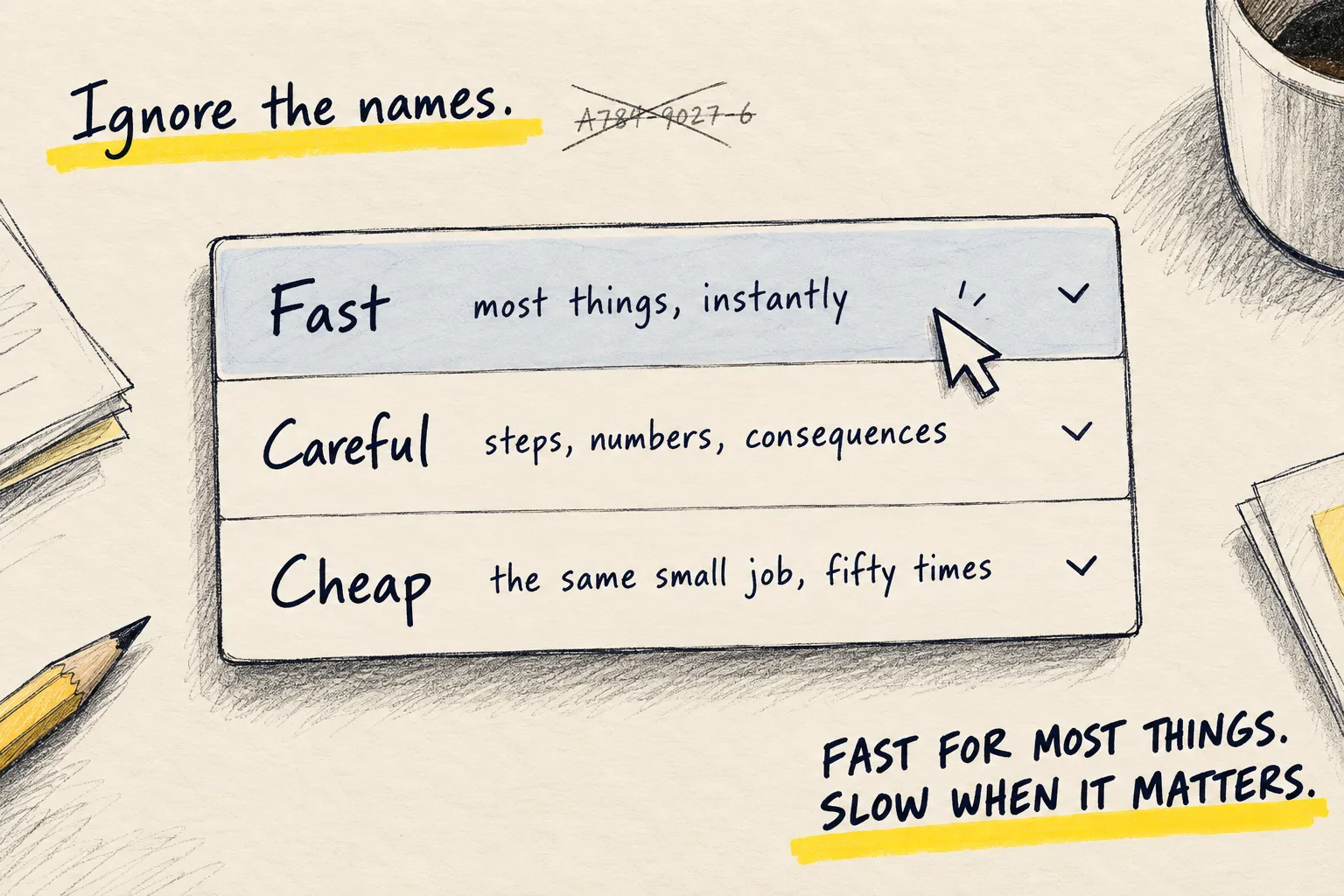
- Use the cheap model for the routine stuff, because it costs fewer tokens per answer and you have a lot of routine stuff.
Curious how much a thing costs before you send it?
Roughly how many tokens is the text below, and how much of a typical context window would
it use? One line, then stop.

[paste the text]A two-page rental agreement pasted in, plus the prompt above
Roughly 1,300 tokens. That is a small fraction of a typical context window, well under 2 percent.